Driving through Oman is one of the best ways to experience its striking mix of mountain ranges, coastal roads, traditional villages, and modern cities, with routes stretching from the busy streets of Muscat to the quiet highways leading toward Wahiba Sands and Salalah. Self-driving gives travellers the flexibility to explore the Sultanate at their own pace. However, before starting a road trip, it is important to understand local driving laws, road etiquette, and rental requirements to ensure a smooth journey.
For travellers planning to rent a car in Oman, preparation makes all the difference. With Final Rentals, visitors can secure flexible vehicle options that support independent travel across the country. A solid understanding of traffic regulations, insurance coverage, and safe driving practices helps ensure a confident and stress-free experience on the road.

Oman is becoming an increasingly popular destination for travellers drawn to its mix of adventure, culture, and natural beauty. While public transport is available in some urban areas, many of the country’s top attractions are far easier to reach by car. Renting a vehicle allows visitors to travel beyond Muscat and explore mountain regions, coastal towns, wadis, and desert landscapes without relying on organised tours.
The country’s well-maintained and clearly signposted road network makes self-driving straightforward, with modern highways connecting key cities such as Muscat, Nizwa, Sur, Salalah, and Sohar. Scenic routes also enhance the experience, turning journeys into part of the adventure. With a rental car, travellers can move at their own pace, stop at viewpoints whenever they choose, and enjoy added convenience when travelling with family or luggage, while also gaining easier access to remote areas where public transport options are limited.
Before driving in Oman, travellers must meet specific licensing and documentation requirements to ensure they are legally allowed to operate a vehicle in the country. Understanding these rules in advance helps avoid issues with rental providers and checkpoints during travel.
Legal driving eligibility: Many visitors can drive using an international driving permit or a valid licence from approved countries. Travellers from the GCC, UK, USA, Canada, Australia, and several European nations are often allowed to use their domestic licence for short stays.
Licence confirmation before travel: Tourists planning to book a car should verify licence requirements with their rental provider before arrival. Some companies require both a domestic licence and an International Driving Permit, particularly for non-English licences.
Required travel documents: Drivers must carry essential documents such as a passport copy, a valid driving licence, an International Driving Permit (if required), vehicle registration, and a rental agreement. Keeping these accessible is important as police checkpoints may appear on highways and near border areas.
The minimum driving age in Oman is generally 18 years old, although most car rental companies set the minimum age for renting a vehicle at 21. For certain premium models or larger vehicle categories, the requirement may increase to 25 years or older, depending on the provider.
In addition to age limits, young driver surcharges may apply for those below a certain threshold, based on the rental company’s policies. For this reason, travellers are advised to carefully check age restrictions and insurance conditions before confirming a booking.
Many visitors opt for SUVs or four-wheel-drive vehicles when planning trips to mountainous or desert regions. These vehicles often come with additional age or experience requirements, as they are better suited to more demanding terrain and longer off-road journeys.
Oman has strict traffic regulations designed to improve road safety and reduce accidents. Tourists who rent a car in Oman should familiarise themselves with local road laws before driving.
In Oman, vehicles drive on the right-hand side of the road, and steering wheels are positioned on the left side of vehicles. Drivers must overtake from the left and follow lane discipline carefully, especially on motorways.
Seat belts are mandatory for front-seat passengers, and drivers are expected to obey all traffic signs and road markings. Mobile phone use while driving is prohibited unless using a hands-free system.
Traffic enforcement is taken seriously in Oman, and many roads are monitored by speed cameras. Failing to follow traffic laws may result in fines, licence penalties, or legal complications.
Before driving in Oman, travellers should understand how speed limits vary by road type and how strictly they are enforced across the country. Being aware of these rules helps ensure safer driving and avoids unnecessary fines during your trip.
Speed limits by road type: Residential and urban roads are typically 40–60 km/h, while larger city roads can reach up to 80 km/h. On highways and motorways, speed limits may reach 120 km/h, but drivers must always follow posted road signs.
Strict traffic enforcement: Speed cameras are widely used, especially around Muscat and major highways between cities. Traffic violations are strictly enforced and may result in fines that are often linked to the rental agreement when booking a car.
Oman has extremely strict drink-driving laws. Driving under the influence of alcohol is illegal, and the country applies a zero-tolerance policy. Tourists should never attempt to drive after consuming alcohol.
Penalties may include heavy fines, imprisonment, licence suspension, and legal action. Rental insurance coverage may also become invalid if alcohol is involved in an accident.
Families travelling with children should ensure appropriate child safety measures are followed. Young children should use suitable child seats, especially during long journeys.
Travellers planning to rent a car with family members can usually request child seats from rental providers during booking. Reserving these in advance is recommended, particularly during busy travel seasons.
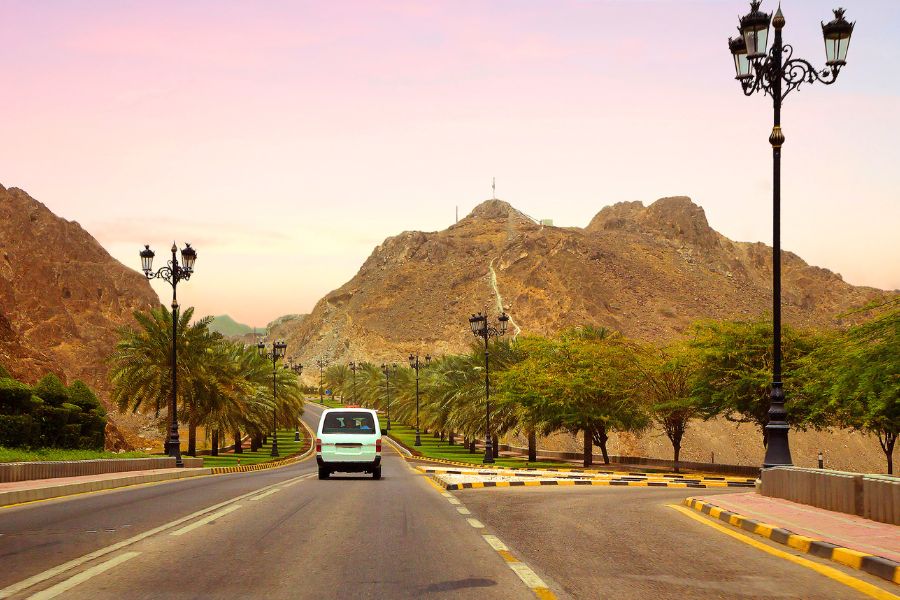
Many tourists prefer renting a car in Oman because of the country’s excellent road infrastructure. Major roads are modern, well-paved, and maintained to high standards, while highways connecting major cities are smooth and easy to navigate, making long-distance travel comfortable. Road signs are also displayed in both Arabic and English, helping international visitors drive with greater confidence.
However, conditions can vary in remote areas. Mountain roads may have steep inclines, sharp turns, and narrow sections, while desert routes often require specialised vehicles and extra caution. Travellers should research routes carefully before driving into rural regions, especially during adverse weather conditions.

As Oman’s capital and busiest city, Muscat can experience heavy traffic during peak hours. Visitors renting a car should remain patient and alert, particularly when navigating roundabouts, motorway junctions, and busy intersections. Since roundabouts are especially common throughout Oman, understanding proper lane positioning before entering is important, as drivers already inside generally have priority.
Parking is widely available in shopping centres, hotels, and tourist areas, though visitors should still check parking signs carefully to avoid fines. Despite occasional congestion, driving in Muscat is generally well organised and less aggressive than in many larger international cities.
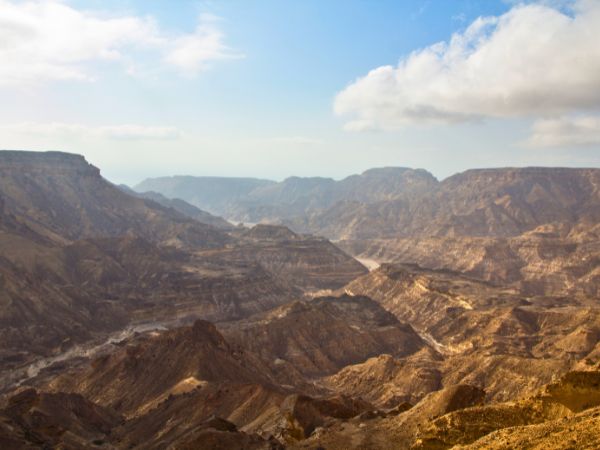
Exploring Oman’s rural and desert regions is often one of the most memorable parts of a road trip. Destinations such as Wahiba Sands, Jebel Akhdar, Jebel Shams, and remote coastal villages attract adventurous travellers year-round. However, driving in these areas can be more challenging, so proper preparation is essential.
Vehicle Choice: Travellers planning mountain or desert trips should consider renting a four-wheel-drive vehicle. These vehicles are better suited for rough terrain, steep roads, and off-road conditions.
Mountain and Desert Driving: Mountain roads may feature steep gradients, winding routes, and narrow sections. Desert tracks often require off-road driving experience and careful navigation.
Safety Preparation: Travellers should avoid difficult off-road routes without proper preparation, navigation equipment, and sufficient fuel supplies. Planning can reduce the risk of getting stranded in remote areas.
Weather Awareness: Checking weather forecasts before travelling is important, particularly during rainy periods. Heavy rain can sometimes cause flash flooding in wadis and low-lying roads.
Fuel prices in Oman are generally lower than in many European countries, making road trips more affordable for tourists. Petrol stations are widely available in cities and along major highways, with many offering convenience shops, tyre pressure checks, car washing facilities, and rest areas to support long-distance travel.
However, travellers driving into remote regions should refill their fuel tanks whenever possible, as stations may be less frequent outside urban centres. While cash and card payments are commonly accepted at major stations, carrying some cash can still be useful in rural areas, especially for those travelling through mountain or desert regions where fuel stations can be far apart.
Insurance is an important factor when renting a car in Oman. While basic insurance is included, travellers should carefully review coverage details and policy limits before signing any rental agreement.
Third-Party Insurance: Third-party liability insurance is generally mandatory with rental vehicles. It covers damage caused to other vehicles or property.
Comprehensive Coverage: Many travellers choose additional comprehensive insurance for greater protection. This coverage may reduce financial liability for theft, accidents, or vehicle damage.
Collision Damage Waiver: Collision damage waivers help lower the driver’s financial responsibility after an accident. However, excess fees may still apply depending on the rental policy.
Travellers should also understand coverage limits, excess charges, off-road exclusions, additional driver policies, and emergency assistance procedures before signing agreements. Reading the terms carefully and choosing reliable rental providers can help prevent misunderstandings and ensure better support if unexpected incidents occur during the trip.
Modern navigation technology has made driving in Oman much easier, with most travellers using smartphone apps or GPS to travel between destinations. Mobile coverage is generally reliable in populated areas but may weaken in remote desert or mountain regions.
Before long journeys, travellers should download offline maps, fully charge devices, carry power banks, and plan fuel and rest stops in advance, while also informing someone of their route when travelling to isolated areas. Although road signs are in both Arabic and English, drivers should remain attentive, especially at night or in mountainous terrain.
Choosing the right vehicle and preparing properly in Oman can greatly improve safety and convenience, especially given the mix of city, highway, and desert or mountain driving conditions.
Vehicle Selection: Travellers should consider passengers, luggage, routes, and terrain when choosing a car. SUVs are generally better for desert and mountain travel, while smaller cars suit city driving.
Pre-Drive Checks: Before leaving the rental office, inspect the vehicle for damage and take photos. Also, confirm fuel policies, insurance coverage, and emergency contacts.
Travellers should carry water for long drives, keep emergency numbers accessible, avoid driving when tired, and regularly check tyre conditions. Following traffic rules and speed limits helps ensure a safer and smoother journey across Oman.

Selecting a dependable rental provider can greatly improve your travel experience in Oman. Renting a car with Final Rentals offers well-maintained vehicles, transparent pricing, comprehensive insurance options, responsive customer support, and flexible booking services, making it easier for visitors to navigate unfamiliar driving conditions.
Choosing a reliable provider like this can also help reduce issues such as hidden fees, unclear insurance terms, or concerns about vehicle condition, resulting in a smoother and more stress-free rental experience.
Road trips are one of the best ways to experience Oman’s diverse landscapes, from coastal highways and mountain villages to desert sunsets and historic forts. Popular routes include Muscat to Nizwa, coastal drives between Muscat and Sur, Salalah’s seaside roads, Jebel Akhdar mountain routes, and adventures near Wahiba Sands, each offering unique scenery and cultural experiences. Renting a car gives travellers the freedom to stop at viewpoints, restaurants, beaches, and local towns, allowing for a more flexible and authentic travel experience beyond fixed tour schedules.
Driving through Oman allows travellers to experience the country’s natural beauty, cultural heritage, and modern infrastructure at their own pace, from coastal highways and mountain roads to deserts and historic towns. To ensure a safe and smooth journey, it is important to understand local driving laws, licensing requirements, insurance coverage, and road safety practices.
Booking with Final Rentals simplifies the process, offering suitable vehicles, transparent terms, and flexible booking options, while the Final Rentals app on Google Play and the App Store helps manage bookings and plan trips with ease. With proper preparation, visitors can travel confidently whether exploring Muscat or taking a cross-country road trip.
Yes, many tourists can drive in Oman using an International Driving Permit together with a valid domestic driving licence. Some visitors from certain countries may also be allowed to drive using only their home licence for short stays.
Driving in Oman is generally safe thanks to its modern highways and well-maintained road network. However, visitors should stay alert to fast-moving traffic, occasional animals on rural roads, and sudden weather changes.
Smaller vehicles are usually sufficient for city driving and short trips within urban areas. SUVs or four-wheel-drive vehicles are better suited for mountain roads, desert terrain, and remote destinations.
Speed limits are enforced using widespread speed cameras across highways and urban roads. Drivers should always pay close attention to posted limits to avoid fines.
Travellers should carefully review insurance coverage, fuel policies, excess charges, and emergency assistance details before booking. It is also important to check any restrictions related to off-road use or cross-border travel.